Independent data halls
Multiple data halls can support large-scale requirements and phased deployment.
The IPC Hyperscale Campus is envisioned as a large-scale facility designed for customers with substantial computing, storage, connectivity, and expansion requirements.
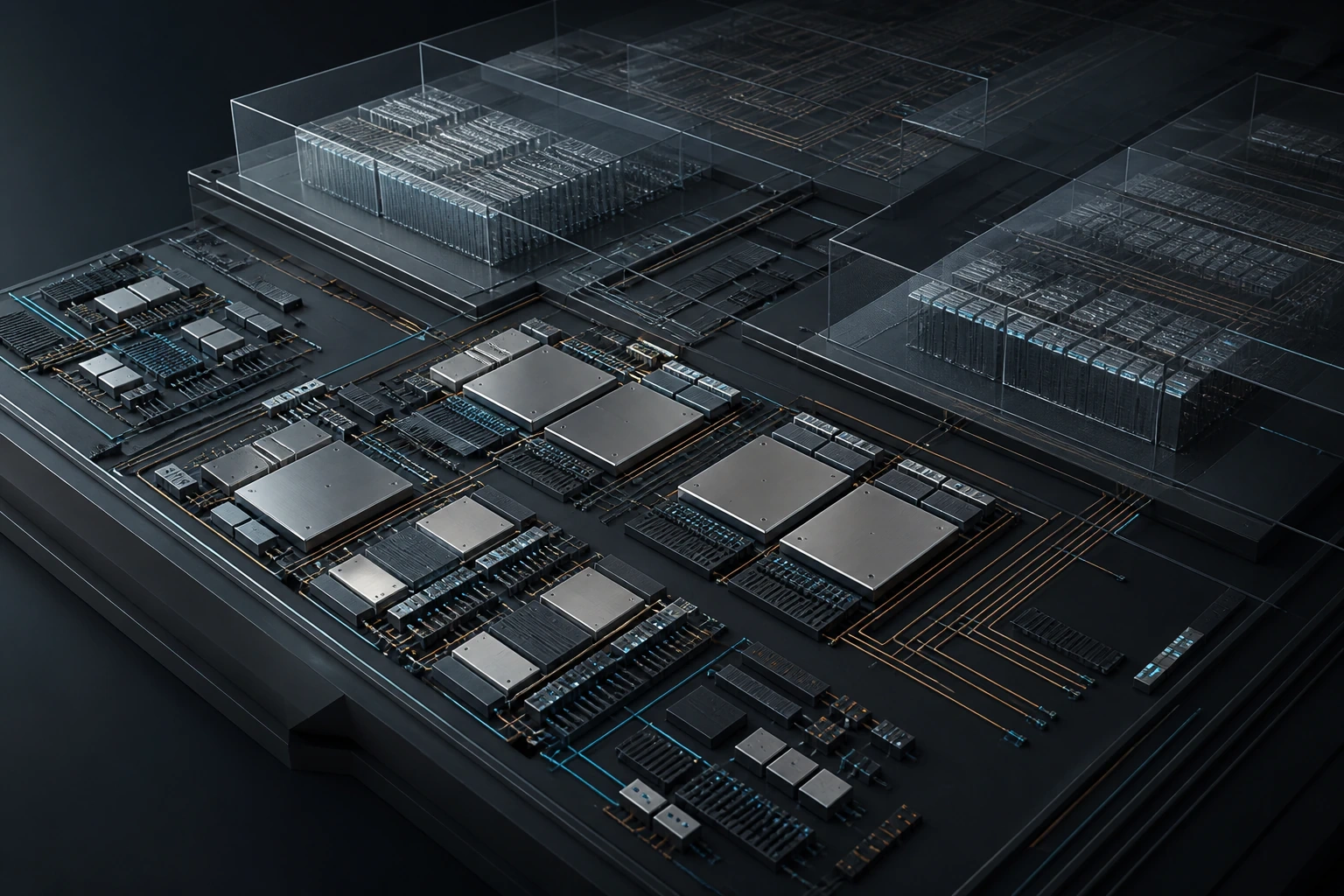
Its design priorities include energy efficiency, resilient power systems, scalable data hall capacity, network diversity, and operational flexibility.
Multiple data halls can support large-scale requirements and phased deployment.
Capacity can be added in stages as computing, storage, and connectivity requirements grow.
Power systems, telecommunications rooms, and customer areas can be planned around each deployment.
Multiple fiber entry points can support diverse networks and more resilient connections.
Multiple physical entry points and diverse fiber routes can reduce dependence on a single network path and improve service resilience.
The facility is intended to connect with domestic carrier networks, internet exchanges, cloud service providers, international cable systems, customer sites, and other IPC locations.
The campus design may incorporate efficient cooling, modular infrastructure, renewable energy sourcing, and water and energy monitoring.
Renewable energy sourcing may form part of the campus operating model.
Cooling design can be matched to workload density, climate, and facility requirements.
Capacity can come online in stages so resource use follows demand.
Water and energy monitoring can inform operating decisions and continuous improvement.
Capture the workload, deployment model, location needs, and timing in a structured summary for solution planning.
This form prepares a summary in your browser. Your entries are not uploaded or stored.